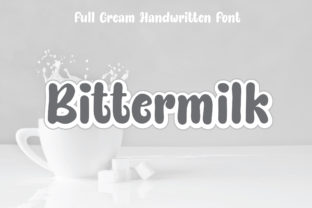
Bittermilk: A Bold Handwritten Font
Bittermilk is a unique handwritten font that brings a fresh and creative energy to any design. Its natural, flowing style makes it ideal for projects that need a personal touch or a sense of authenticity. Whether you're working on a logo, social media post, or marketing material, Bittermilk can add a distinctive flair that stands out.
What Makes Bittermilk Special?
Bittermilk is more than just a font—it's a style that captures the essence of handwriting with a modern twist. The letters have a soft, organic shape that feels both approachable and confident. This combination makes it perfect for a wide range of applications where a human-like feel is desired.
Unlike many digital fonts that can feel rigid or artificial, Bittermilk has a warm, expressive quality. It’s designed to look like it was written by hand, giving your work a more personal and engaging presence. This makes it especially appealing for brands or individuals who want to convey creativity and individuality.
Why Use Bittermilk?
There are several reasons why Bittermilk might be the right choice for your next project. First, its boldness ensures that it commands attention without being overwhelming. The contrast between thick and thin strokes adds visual interest and helps the text stand out in a crowd.
Second, Bittermilk is versatile. It works well in both large and small sizes, making it suitable for everything from headlines to body text. Its readability is impressive considering its stylized nature, which means it can be used in a variety of contexts without sacrificing clarity.
Third, Bittermilk is great for adding personality to your designs. If you're looking to create something that feels more human and less mechanical, this font can help achieve that goal. It’s particularly useful for branding, packaging, and content that needs to connect with an audience on an emotional level.
Where Can You Use Bittermilk?
Bittermilk is a valuable tool for designers, marketers, and creators across different industries. For example, a small business owner might use it to design a logo that reflects their brand's personality. A blogger could use it for headings on their website to make their content more visually engaging.
In the world of social media, Bittermilk can help posts stand out in a busy feed. Whether it's for Instagram stories, Twitter headers, or Facebook banners, the font adds a stylish and eye-catching element. It also works well in print materials like brochures, posters, and flyers, where a handwritten look can make a big difference.
Educators and students might find Bittermilk useful for creating lesson plans, presentations, or study guides that feel more dynamic and less formal. Its friendly appearance can make learning materials more inviting and easier to digest.
Best Practices for Using Bittermilk
While Bittermilk is a powerful font, it's important to use it thoughtfully. One key consideration is how it interacts with other elements in your design. Since it's bold and expressive, it may not pair well with overly complex or busy layouts. Keeping the rest of the design simple can help the font shine.
Another tip is to experiment with different weights and styles. Some versions of Bittermilk may offer variations like light, regular, or bold, allowing you to adjust the font to suit your specific needs. Testing these options can help you find the right balance for your project.
Also, remember that less is often more. Using Bittermilk for a single headline or a short phrase can be more effective than using it throughout an entire document. This helps maintain readability while still leveraging the font's unique qualities.
Getting Started with Bittermilk
If you're new to using handwritten fonts, starting with Bittermilk can be a rewarding experience. Many design platforms and software programs include it as an option, making it easy to access. You can also download it from font marketplaces if you need a specific version or license.
Before diving in, take some time to explore how Bittermilk looks in different sizes and contexts. Try using it in a few sample projects to see how it performs. This hands-on approach will help you understand its strengths and limitations, allowing you to make better decisions in future designs.
Finally, don’t be afraid to mix and match. While Bittermilk is a standout font on its own, combining it with other complementary typefaces can lead to even more creative and professional results.