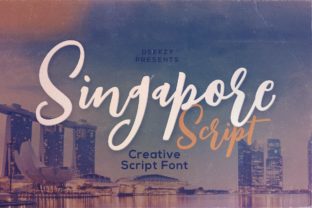
Singapore Script: A Playful Handwritten Font for Modern Design
Singapore Script is a modern handwritten script font that brings a unique, playful feel to any design project. With its brush-style strokes, it adds a personal and dynamic touch that can elevate the visual appeal of everything from branding materials to digital content. This font is particularly well-suited for projects that aim to convey creativity, warmth, or a casual tone.
What Makes Singapore Script Distinct?
Singapore Script stands out due to its distinct brush style, which mimics the fluidity of hand-drawn letters. Unlike more rigid serif or sans-serif fonts, this script offers a sense of movement and energy. The varying thickness of the strokes gives it a natural, organic look that feels more authentic than many digitally generated scripts. This makes it ideal for designs that require a human touch or a sense of spontaneity.
The font’s character set includes both uppercase and lowercase letters, along with punctuation and special symbols, making it versatile for different types of text. Its legibility is generally good in larger sizes, though it may become less clear when used in small fonts or dense paragraphs. This means it works best for headlines, logos, or short phrases rather than long blocks of text.
Comparing Singapore Script to Similar Options
When considering Singapore Script, it’s helpful to compare it with other similar handwritten fonts to understand where it fits best. Fonts like Brush Script or Lobster offer a similar brush-like appearance but may have different stylistic nuances. For example, Brush Script has a more traditional calligraphy feel, while Singapore Script leans toward a more contemporary and informal aesthetic.
Other alternatives, such as Great Vibes or Pacifico, also provide a script style but often emphasize elegance or formality. These might be better suited for wedding invitations or formal branding, whereas Singapore Script’s playful nature makes it more appropriate for casual or creative projects. It’s important to consider the tone and purpose of your design when choosing between these options.
Strengths and Best-Fit Situations
Singapore Script excels in situations where a friendly, approachable, or artistic vibe is desired. It’s commonly used in social media graphics, promotional banners, and personal branding materials. Its brush style can add a sense of movement and personality that static fonts may lack. This makes it a popular choice for designers looking to create a more engaging and visually interesting layout.
One of the key strengths of Singapore Script is its ability to convey emotion and individuality. It can make a design feel more personal and less generic, which is especially valuable in a world where many digital experiences are highly standardized. Whether you’re designing a logo, a poster, or a website header, this font can help your work stand out in a meaningful way.
Tradeoffs and Limitations
While Singapore Script has many advantages, it also comes with some tradeoffs. One of the main limitations is its readability in smaller sizes. When used in body text or low-resolution formats, the font may become difficult to read, which could detract from the overall effectiveness of the design. This means it’s best reserved for display purposes rather than extensive textual content.
Another consideration is the font’s suitability for professional or formal contexts. While its playful nature can be an asset in certain scenarios, it may not align with the tone required for corporate or legal documents. In such cases, a more structured font might be a better fit. Additionally, because it’s a specialized script, it may not be as widely supported across all platforms or software, which could limit its usability in some workflows.
When Singapore Script Is the Right Choice
Singapore Script is an excellent choice when the goal is to create a warm, expressive, or unconventional design. It’s particularly effective for projects that target younger audiences or aim to communicate a sense of fun and creativity. For instance, it could be used in a children’s book cover, a music festival poster, or a lifestyle blog header.
If your design needs a touch of personality and a handcrafted feel, Singapore Script can be a strong option. It’s also beneficial when you want to differentiate your brand or project from others that use more standard typography. By incorporating this font, you can add a unique element that resonates with your audience and enhances the visual storytelling of your work.
When Other Options May Be Better
There are situations where other fonts may be more appropriate than Singapore Script. For example, if the primary goal is clarity and professionalism, a clean sans-serif or serif font might be a better choice. These fonts are typically more versatile and easier to read across different mediums and sizes.
In cases where consistency and uniformity are important, such as in large-scale branding efforts or multi-platform campaigns, a more standardized typeface may be preferable. This ensures that the visual identity remains cohesive and recognizable across all touchpoints. Additionally, if the design requires a high level of precision or technical accuracy, a non-script font might be more suitable.
Practical Examples and Use Cases
Consider a scenario where a small business owner wants to create a logo for a boutique café. Using Singapore Script could help convey a cozy, artisanal atmosphere that aligns with the brand’s values. The font’s brush style would add a handmade quality that complements the café’s theme.
On the other hand, if the same business were creating a menu for a high-end restaurant, a more refined and elegant font might be more appropriate. In this case, the focus would be on sophistication and clarity rather than a playful aesthetic. This illustrates how the choice of font can significantly impact the perception and effectiveness of a design.
Another example is a social media campaign for a fitness app. Here, Singapore Script could be used in eye-catching headlines or motivational quotes to add a dynamic and energetic feel. However, for the app’s user interface or instructional content, a simpler and more readable font would likely be necessary to ensure usability.